Semaglutide injections are a once-weekly GLP-1 receptor agonist. When a prescriber chooses them, they are used to help manage type 2 diabetes and, in some licensed settings, weight. They are not a vitamin shot, not a daily tablet, and not something to start from a social-media protocol.
This article explains the mechanism in everyday language, then points to the injection strengths we list. It is general information for adults in the United States, United Kingdom, Australia and New Zealand. It is not a prescription or a substitute for a clinician who knows your history.
What a weekly GLP-1 injection is doing
GLP-1 is a gut hormone released after you eat. It tells the pancreas to release insulin when blood sugar is high, slows how quickly the stomach empties, and reduces appetite signals in the brain. Semaglutide is built to sit on the same receptor for days, which is why one subcutaneous dose can cover a week.
Because gastric emptying slows, many people feel full sooner. Nausea is the most common early complaint, especially if the dose jumps too fast or meals stay large and fatty. That is a reason licensed schedules start low and rise on a calendar a clinician sets — not because a higher milligram is always “better.”
Why the first weeks are a titration, not a race
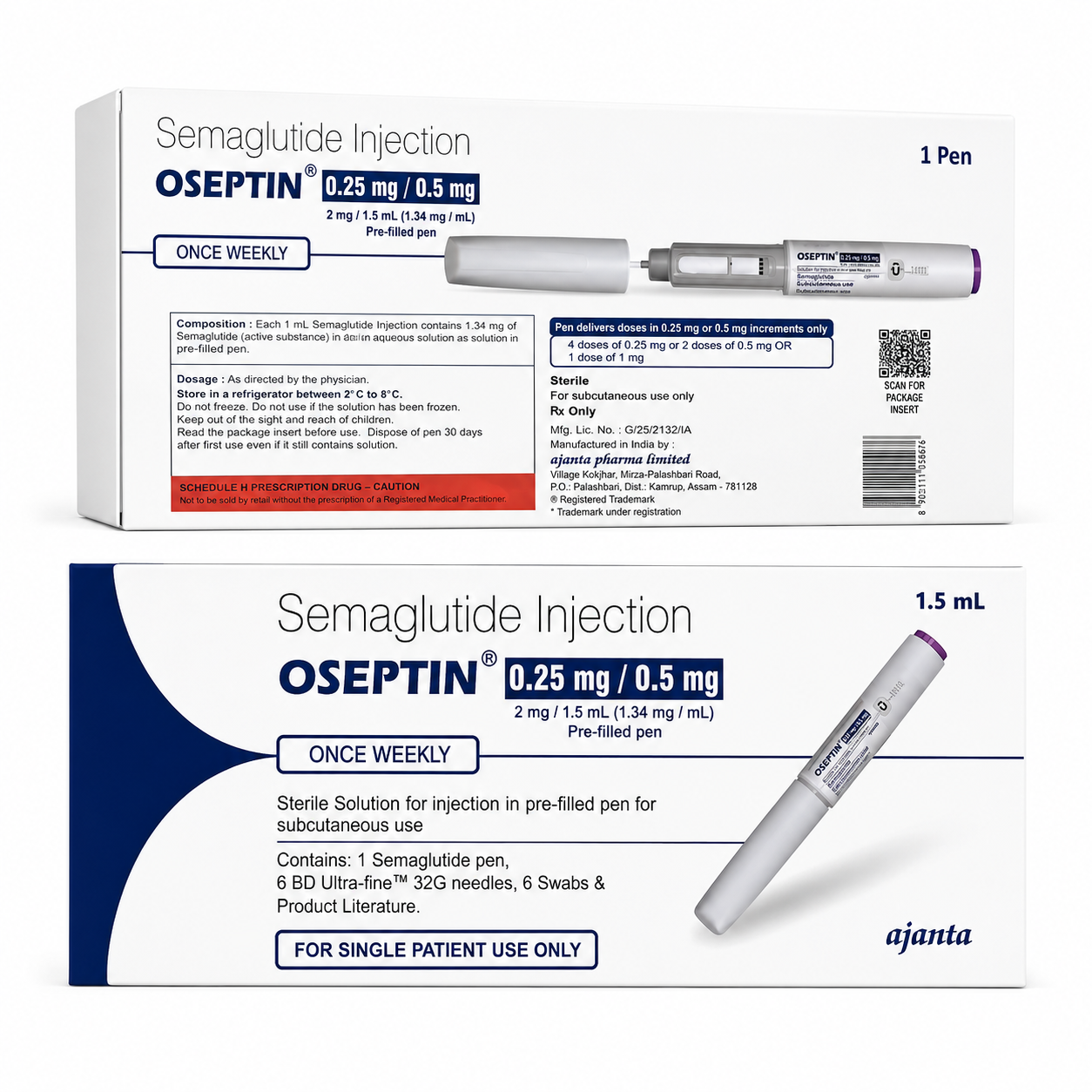
Starter pens in the 0.25 mg to 0.5 mg range exist so the gut can adapt. A 1 mg weekly dose is a later step for many adults, not a first injection. Vial strengths such as 2 mg and 4 mg belong in a plan a specialist has already chosen. Taking a maintenance vial on day one raises the chance of vomiting, dehydration and people abandoning treatment that might have been tolerable if it had been stepped.
If a dose is missed, product leaflets usually give a window (often a few days) in which you can still inject that week, then skip and resume the usual day. Copying a neighbour’s “catch-up double dose” is a bad idea. Ask the person who prescribed it.
Pens, vials and what we stock
Our Semaglutide category lists weekly presentations that match common starter and higher strengths: a 0.25–0.5 mg pen, a 1 mg pen, a 2 mg vial and a 4 mg vial. Pack photos and pack-size prices sit on each product page. Storage is typically refrigeration before first use, then a limited time at room temperature once in use — always follow the leaflet in the box you receive.
Injections go into subcutaneous fat (abdomen, thigh or upper arm), rotating sites. They are not intramuscular bodybuilding shots. Needles, alcohol swabs and a sharps container are part of safe use; local pharmacy rules on disposing of sharps still apply in all four countries we serve.
Who should pause and call a clinician first
Semaglutide is usually avoided in pregnancy, while trying to conceive, and while breastfeeding. People with a personal or family history of medullary thyroid carcinoma or MEN2 are typically told not to use this class. A history of pancreatitis, severe gastrointestinal disease, or diabetic retinopathy that is already unstable also needs a specialist view before any order.
Combine it with other glucose-lowering drugs only if the prescriber is watching for hypos. Drink fluids if you cannot keep food down. Severe abdominal pain radiating to the back, persistent vomiting, or sudden vision change is a reason to seek urgent care rather than another injection.
Ordering for the USA, UK, Australia and New Zealand
We only ship those four countries. Semaglutide is a prescription medicine in each of them. Importing a pen or vial for personal use can still be restricted even when a clinician agrees you need it. You remain responsible for local law, customs and using the medicine as directed.
If weekly injections are the route your clinician has chosen, browse the category, pick the strength on your plan, and keep the box leaflet. If tablets were prescribed instead, those are listed in the same Semaglutide category.
This page is general information. Use medicines only as a qualified clinician directs, and follow import rules in your country.